Watched this film today. Although having some links with the film 'Simba' i.e. indigenous people overthrowing their colonial masters the Battle for Algiers is told from the viewpoint of the people attempting to overthrow the colonialists. Not surprisingly the bias of the film is towards them although they do not shy from showing the atrocities they committed. Furthermore whereas 'Simba' concentrates on the battle between the Mau Mau and a small group of farmers 'Battle for Algiers' is a conflict between local freedom fighters (or terrorist if you are French) and a large military force.
What the film failed to take into account was the sub-plot of the French Army who suffered defeat at the hands of the Germans in the Second World War and at Dien Bien Phu in the Indo-China War. This latter battle had many similar aspects to the Battle of Algiers insofar as a colonial independence movement had successfully overthrown the rulers. It would seem that the opportunity to defeat the native population and restore French pride was an underlying cause for the behaviour of the French Army. It should also be remembered that the political leaders of France after Charles de Gaulle became President were minded to give independence to Algeria and this brought a bitter response from the Army who, it is alleged, planned to assassinate de Gaulle. Independence was achieved in 1962 but by this time the Algerians were pushing against an opening door.
A strange mix of films presumably chosen and interpreted by Dyer to aid in his search for 'whiteness'. As stated previously it is my view that he fails to do this largely because he feels that 'blackness' and 'whiteness' are the only opposing elements whereas the history of such places as Nigeria, Kenya, Zimbabwe and Algiers and the recent events in other parts of the Arab World show that their are many other loyalties that people feel other than to the colour of their skin.
Wednesday, 15 February 2012

Sunday, 12 February 2012
Night of the Living Dead
Watched the film through. The film is in contrast to the images presented of the two different ethnic groups as shown in Simba. Here the strong forceful character is black whilst the whites are depicted as weak ineffectual and in the case of the older man cowardly. We do have the interesting juxtaposition of the older of the two white men and the younger who is more ready to work under the control of the black man and the tension that this creates in the group.
As we are not offered Dyer's explanation of the film and its link to his desire to examine the concept of 'whiteness' in the extract in the reader (see reference in the blog immediate to this one) one can only speculate. I presume it is the way, in this case, where 'black' is shown to be ordered, rational and in control and 'white' is shown to be disordered, irrational and lacking control that is the opposite to the version in 'Simba'. However both are films and particularly in the case of 'Night' are fictional events that have no reality other than that created by the Writer and the Director. They are totally false images that rely upon the plausibility of the plot or story line to get the message across that they could be 'real'.
Can we draw any conclusions about the concept of 'whiteness' from what we have been shown. I suspect not. To experience 'blackness' or 'whiteness' (in Dyer's terms) it is necessary to be aware of your 'self' as seen by the other group and how they respond and behave towards you. This defines you in that relationship. I recall visiting a public house in Nottingham with a friend. It was in an area that I had known as a child (my grandparents lived there) but had not visited for some time. Every other person in the pub was black. There was no hostility just a sense of being examined as something different and unusual in that setting. It was my 'whiteness' that made me different and worthy of examination. It was the intensity of the gaze that surprised and discomfited me.
As I suggested in my previous blog I believe that Dyer's approach is too simplistic in that it does not take into account the differences within the larger groups that are equally as defining as the colour of ones skin. Dislike or open hatred of a group is not confined to the colour of a person's skin. Having been around at the time of the 'mods' and 'rockers' all that seemed to be needed for open conflict to erupt was for someone to be seen who was wearing the costume of the 'hated' group. Humans define themselves by thrusting onto others those things that are seen as 'bad'. Of course it is much easier if they are easily identifiable such as someone of a different colour but it does not stop there. The Nazis had a whole range of groups that were deemed untermensch with disastrous consequences.
Throughout this exercise I have been aware of an increasing sense of unease and distaste. I believe the reason for this is that the attempt, for academic purposes, to separate us all into 'black' or 'white' (I wonder how the Asian population sees themselves) or to talk of 'blackness' or 'whiteness' can only feed into racism. Implicit in such separation is that there is a difference that can be applied to a whole group. Whilst the academic (who survives through published works) can claim it to be an intellectual exercise these are feelings that are unique to a living person. They affect their every day lives in a meaningful way either positively or negatively.
As we are not offered Dyer's explanation of the film and its link to his desire to examine the concept of 'whiteness' in the extract in the reader (see reference in the blog immediate to this one) one can only speculate. I presume it is the way, in this case, where 'black' is shown to be ordered, rational and in control and 'white' is shown to be disordered, irrational and lacking control that is the opposite to the version in 'Simba'. However both are films and particularly in the case of 'Night' are fictional events that have no reality other than that created by the Writer and the Director. They are totally false images that rely upon the plausibility of the plot or story line to get the message across that they could be 'real'.
Can we draw any conclusions about the concept of 'whiteness' from what we have been shown. I suspect not. To experience 'blackness' or 'whiteness' (in Dyer's terms) it is necessary to be aware of your 'self' as seen by the other group and how they respond and behave towards you. This defines you in that relationship. I recall visiting a public house in Nottingham with a friend. It was in an area that I had known as a child (my grandparents lived there) but had not visited for some time. Every other person in the pub was black. There was no hostility just a sense of being examined as something different and unusual in that setting. It was my 'whiteness' that made me different and worthy of examination. It was the intensity of the gaze that surprised and discomfited me.
As I suggested in my previous blog I believe that Dyer's approach is too simplistic in that it does not take into account the differences within the larger groups that are equally as defining as the colour of ones skin. Dislike or open hatred of a group is not confined to the colour of a person's skin. Having been around at the time of the 'mods' and 'rockers' all that seemed to be needed for open conflict to erupt was for someone to be seen who was wearing the costume of the 'hated' group. Humans define themselves by thrusting onto others those things that are seen as 'bad'. Of course it is much easier if they are easily identifiable such as someone of a different colour but it does not stop there. The Nazis had a whole range of groups that were deemed untermensch with disastrous consequences.
Throughout this exercise I have been aware of an increasing sense of unease and distaste. I believe the reason for this is that the attempt, for academic purposes, to separate us all into 'black' or 'white' (I wonder how the Asian population sees themselves) or to talk of 'blackness' or 'whiteness' can only feed into racism. Implicit in such separation is that there is a difference that can be applied to a whole group. Whilst the academic (who survives through published works) can claim it to be an intellectual exercise these are feelings that are unique to a living person. They affect their every day lives in a meaningful way either positively or negatively.
Simba
Watched this film the other night. Felt that there should be an automatic award of credits for anyone who has managed to sit through the film. It is absolutely awful. As a piece of entertainment it is on a par with the very worst of amateur dramatics and as a reflection of history, whatever your point of view, it is as biased as is possible. The summation of the film provided by Dyer [visual culture: the reader; eds jessica evans and stuart hall; Sage Publications 2010; pp 461 - 466] is an interpretation that supports his particular approach by the selection of elements of the film whilst ignoring others. I have no particular quarrel with this approach but I do not think that he manages to throw any more light on the concept of 'whiteness' as was his stated intention.
Dyer states the film is "organised round a rigid binarism with white standing for modernity, reason, order, stability and black standing for backwardness, irrationality, chaos and violence." As a binary system has only two possibilities describing the film in this way ignores the differences both large and small within the two main groups as depicted in the film. We have positions in the 'white' camp that range from working with the black group to shooting them out of hand and the 'black' camp that ranges from those who sided against the Mau Mau and those who formed the greater part of the forces defending the status quo and the heroic acts of the individuals such as the black servant who, although, fatally wounded, fired the rocket to get help when his master and mistress were being attacked.
Dyer tells us that he was taught the scientific difference between black and white at primary school. [ibid p 458]. His explanation is still largely accurate (black is the absence of colour and white is the presence of all colours in equal proportions) and he remarks on the way that 'black' in racial terms refers to 'coloured'. What he fails to do is to follow his analogy further. The colour or lack of colour we see when viewing objects is a combination of the nature of the reflective surface and its interpretation by our brain. Crudely put a surface that is seen as black reflects none of the spectrum and one that is seen as white reflects all of the spectrum in equal proportion. Our interpretation of what we 'see' is very much affected by our expectations. For example we see a white shirt as white in tungsten light whereas if an image of the same shirt in the same conditions is taken by a camera that has not been programmed to take images in tungsten light it will have an orange hue. This was a particular problem with film cameras using standard film.
In other words the colour of an object is only an indication of its surface properties and tells us very little about its internal structures and what we 'see' is subjective being the product of our biological make up and our learned experiences. To use a more prosaic example anyone who has been shopping with his/her loved one or worst of all presented with clothes and asked "what do you think of this colour" will know that sinking feeling because you see colours close to each other in a different way to your spouse.
In colour there are no boundaries. Colour does not make a step change from one colour to the next. There is gradation. To describe something as 'white' is a convenient shorthand and because we have no need, in our general lives, to distinguish variations. However if it was important we would develop language that would allow us to communicate the difference to others. Somewhere I have read the Intuit have some 400 words for 'snow' because the different nature of snow is of vital importance to their survival.
What has this journey into the nature of colour to do with 'Simba'; 'blackness' or 'whiteness'. The way that we interpret the vast number of colours that we see is an internal act of ours that produces different results by different people. I would argue that this is equally true of seeing 'colour' in people. There is no simple option of joining one camp or another and most will find themselves torn between conflicting elements and both supporting and rejecting the main protagonists ( to continue the analogy of actual colour there is no defined boundaries between 'black' and 'white'). Based on my viewing of 'Simba' I do not believe that Dyer has taken account of this diversity and by failing to do so undermines the conclusions that he reached.
However I plan to watch the 'Night of the Living Dead' later today (in daylight!) so I may change my views.
Dyer states the film is "organised round a rigid binarism with white standing for modernity, reason, order, stability and black standing for backwardness, irrationality, chaos and violence." As a binary system has only two possibilities describing the film in this way ignores the differences both large and small within the two main groups as depicted in the film. We have positions in the 'white' camp that range from working with the black group to shooting them out of hand and the 'black' camp that ranges from those who sided against the Mau Mau and those who formed the greater part of the forces defending the status quo and the heroic acts of the individuals such as the black servant who, although, fatally wounded, fired the rocket to get help when his master and mistress were being attacked.
Dyer tells us that he was taught the scientific difference between black and white at primary school. [ibid p 458]. His explanation is still largely accurate (black is the absence of colour and white is the presence of all colours in equal proportions) and he remarks on the way that 'black' in racial terms refers to 'coloured'. What he fails to do is to follow his analogy further. The colour or lack of colour we see when viewing objects is a combination of the nature of the reflective surface and its interpretation by our brain. Crudely put a surface that is seen as black reflects none of the spectrum and one that is seen as white reflects all of the spectrum in equal proportion. Our interpretation of what we 'see' is very much affected by our expectations. For example we see a white shirt as white in tungsten light whereas if an image of the same shirt in the same conditions is taken by a camera that has not been programmed to take images in tungsten light it will have an orange hue. This was a particular problem with film cameras using standard film.
In other words the colour of an object is only an indication of its surface properties and tells us very little about its internal structures and what we 'see' is subjective being the product of our biological make up and our learned experiences. To use a more prosaic example anyone who has been shopping with his/her loved one or worst of all presented with clothes and asked "what do you think of this colour" will know that sinking feeling because you see colours close to each other in a different way to your spouse.
In colour there are no boundaries. Colour does not make a step change from one colour to the next. There is gradation. To describe something as 'white' is a convenient shorthand and because we have no need, in our general lives, to distinguish variations. However if it was important we would develop language that would allow us to communicate the difference to others. Somewhere I have read the Intuit have some 400 words for 'snow' because the different nature of snow is of vital importance to their survival.
What has this journey into the nature of colour to do with 'Simba'; 'blackness' or 'whiteness'. The way that we interpret the vast number of colours that we see is an internal act of ours that produces different results by different people. I would argue that this is equally true of seeing 'colour' in people. There is no simple option of joining one camp or another and most will find themselves torn between conflicting elements and both supporting and rejecting the main protagonists ( to continue the analogy of actual colour there is no defined boundaries between 'black' and 'white'). Based on my viewing of 'Simba' I do not believe that Dyer has taken account of this diversity and by failing to do so undermines the conclusions that he reached.
However I plan to watch the 'Night of the Living Dead' later today (in daylight!) so I may change my views.
Friday, 10 February 2012
Project Black part 2

Nelson's Ship in a Bottle
Artist Yinka Shonibare
On the fourth plinth in London's Trafalgar Square
The sculpture of the boat 4.7m long and 2.35m high from keel to the top of the main mast
The sails are made of African batik fabrics, one of the signature touches of the artist. The sails are representative of cultures absorbed into the african culture. The material is is of Dutch waxcloth, that itself is an import of an Indonesian method for wax printing, that arrived in Africa in the middle of the 19th century and became the cloth of choice for African clothing. Shonibare buys the fabric from Brixton market although it is manufactured mainly in Manchester, England or Helmond, Netherlands.
In an interview with the Daily Telegraph (http://www.telegraph.co.uk/culture/art/art-news/7758830/Nelsons-ship-in-a-bottle-unveiled-on-Fourth-Plinth.html) the artist said that his work considers the legacy of British colonialism. He said "Nelson's Ship in a Bottle will be the first project on the fourth plinth to reflect specifically on the relationship between the birth of the British Empire and Britain's present-day multicultural context"
I finish with a quote from the same article in the Telegraph -
"...diversity, when the word is used to describe arts policy, seems to be a different thing altogether. Indeed by trying to capture the essence of difference, it seems to snuff it out altogether. In this reading culture s not fluid, but defined in rigid categories. Artists are not artists but black, Asian or minority ethnic - "culturally diverse". There are specially publicly-funded bursary schemes for black artists, and for funding black-led art groups"
Whilst one has to take into account the political stance of the Telegraph could it be the case that by pigeon-holing particular groups identified by colour or race we are at risk of perpetuating the dominance of the western white culture?
Project Black
In Fanon's "The fact of blackness" [ extract in visual cuture: the reader: eds. jessica evans and stuart hall: Sage Publications 2010 pp 417 -420] the following statements are made:
"As long as the black man is among his own, he will have no occasion, except in minor internal conflicts, to experience his being through others." [p 417]
"For not only must the black man be black; he must be black in relation to the white man" [p 417]
"...his customs and the sources on which they were based, were wiped out because they were in conflict with a civilization that he did not know and that imposed itself on him" [p 418]
"In the white world a man of color encounters difficulties in the development of his bodily schema. Consciousness of the body is a negating activity. It is a third person consciousness." [p 418]
".....the corporeal schema crumbled, its place taken by a racial epidermal schema" [p 419]
"I was at the same time responsible for my body, for my race, for my ancestors,. I subjected myself to an objective examination, I discovered my blackness, my ethnic characteristics; and I was battered down by tom-toms, cannibalism, intellectual deficiency, fetichism, racial defects, slave ships and above all else, above all: 'Sho' good eatin'.' [p 419]
" The Negro is an animal, the Negro is bad, the Negro is mean, the Negro is ugly;..." [p 419]
"I am given no chance. I am overdetermined from without. I am the slave not of the 'idea' that others have of me but of my own appearance" [p 420]
Whilst it could be argued that we are all defined by others and that we can only experience our 'self' through our relationships with others the key point is that expressed as a "racial epidermal schema". A black person is judged, in the first instant, by the colour of his skin and he is ascribed all the characteristics of the 'Negro' no matter how inappropriate or inaccurate. He or she is judged before they have spoken. Compare this with the white person. If he enters so called 'polite society' and has dressed in the proper costume he will be accepted. As soon as he speaks he will be judged on his accent, his alma mater and his work. His 'class' will be decided and all the characteristics of that class will be seen as part of his bodily schema. The 'class' issue is as negating as the colour of one's skin. It is however possible to avoid the problem but being 'black' is not changeable.
Furthermore for those who, for whatever reason, find themselves in a society that is dominantly white the pressure is always on to adopt the ideologies of that white society. Indeed all that surrounds him is the creation of the dominant element not least the education system and the public persona. What we find is the ghettoisation of the minority groups that is caused in part by the natural desire of those groups to live in a community that is supportive of their cultural background and in some cases language and place of birth.
How does this impinge on visual culture. It is a two way street. There is the artist who attempts through his work to visualise the culture of his ethnic origins albeit a culture that is not of the land of his birth. There is a risk that there will be an over-emphasis on a particular interpretation of that culture (consider the diversity in Nigeria and its many languages and cultures) and a failure to recognise that elements that are seen as a natural part of that culture are imports from other cultures. Then there is the viewer who will bring there own mindset who will interpret what is seen through 'eyes' that are coloured by pre-formed opinions. An exhibition that is dedicated to the work of the Black artist and is advertised as such will be affect the preconceptions of the viewing public whatever their colour or background. The pressure is on the artist to produce work that in some way reflects 'blackness' and that rejects the imposed culture of the dominant race. The pressure is also there on the visitor who in some way is asked to sign up to the idea that in some way being a black artist necessarily means producing a particular type of work.
For the black person there is a continuing conflict between what is presented as best and good by the white culture in which they now live and the strident demands of those who insist that they should support and fully appreciate a culture that is possibly at odds with that of those with whom they go to school, work or play. One only has to think of the third and fourth generations of young women whose families came from the sub-continent who find themselves torn between the western culture of their friends and the ethnic culture of their parents and grandparents.
"As long as the black man is among his own, he will have no occasion, except in minor internal conflicts, to experience his being through others." [p 417]
"For not only must the black man be black; he must be black in relation to the white man" [p 417]
"...his customs and the sources on which they were based, were wiped out because they were in conflict with a civilization that he did not know and that imposed itself on him" [p 418]
"In the white world a man of color encounters difficulties in the development of his bodily schema. Consciousness of the body is a negating activity. It is a third person consciousness." [p 418]
".....the corporeal schema crumbled, its place taken by a racial epidermal schema" [p 419]
"I was at the same time responsible for my body, for my race, for my ancestors,. I subjected myself to an objective examination, I discovered my blackness, my ethnic characteristics; and I was battered down by tom-toms, cannibalism, intellectual deficiency, fetichism, racial defects, slave ships and above all else, above all: 'Sho' good eatin'.' [p 419]
" The Negro is an animal, the Negro is bad, the Negro is mean, the Negro is ugly;..." [p 419]
"I am given no chance. I am overdetermined from without. I am the slave not of the 'idea' that others have of me but of my own appearance" [p 420]
Whilst it could be argued that we are all defined by others and that we can only experience our 'self' through our relationships with others the key point is that expressed as a "racial epidermal schema". A black person is judged, in the first instant, by the colour of his skin and he is ascribed all the characteristics of the 'Negro' no matter how inappropriate or inaccurate. He or she is judged before they have spoken. Compare this with the white person. If he enters so called 'polite society' and has dressed in the proper costume he will be accepted. As soon as he speaks he will be judged on his accent, his alma mater and his work. His 'class' will be decided and all the characteristics of that class will be seen as part of his bodily schema. The 'class' issue is as negating as the colour of one's skin. It is however possible to avoid the problem but being 'black' is not changeable.
Furthermore for those who, for whatever reason, find themselves in a society that is dominantly white the pressure is always on to adopt the ideologies of that white society. Indeed all that surrounds him is the creation of the dominant element not least the education system and the public persona. What we find is the ghettoisation of the minority groups that is caused in part by the natural desire of those groups to live in a community that is supportive of their cultural background and in some cases language and place of birth.
How does this impinge on visual culture. It is a two way street. There is the artist who attempts through his work to visualise the culture of his ethnic origins albeit a culture that is not of the land of his birth. There is a risk that there will be an over-emphasis on a particular interpretation of that culture (consider the diversity in Nigeria and its many languages and cultures) and a failure to recognise that elements that are seen as a natural part of that culture are imports from other cultures. Then there is the viewer who will bring there own mindset who will interpret what is seen through 'eyes' that are coloured by pre-formed opinions. An exhibition that is dedicated to the work of the Black artist and is advertised as such will be affect the preconceptions of the viewing public whatever their colour or background. The pressure is on the artist to produce work that in some way reflects 'blackness' and that rejects the imposed culture of the dominant race. The pressure is also there on the visitor who in some way is asked to sign up to the idea that in some way being a black artist necessarily means producing a particular type of work.
For the black person there is a continuing conflict between what is presented as best and good by the white culture in which they now live and the strident demands of those who insist that they should support and fully appreciate a culture that is possibly at odds with that of those with whom they go to school, work or play. One only has to think of the third and fourth generations of young women whose families came from the sub-continent who find themselves torn between the western culture of their friends and the ethnic culture of their parents and grandparents.
Thursday, 9 February 2012
Project Images of woman - Naked Nude
In the last part of the blog we are asked to make a collection of nakedness and the nude and to annotate them to indicate which they represent and how. Implicit in this is that there is a difference between nakedness and nude. I would suggest that it is a false difference or at least a difference that is uniquely of the viewer. In Ways of Seeing [BBC and Penguin Books 1972 pp 47 - 48] John Berger quotes from Genesis the story of Adam and Eve and their fall from Grace in the Garden of Eden. After Eve had taken the apple the story continues:
"And the eyes of both of them were opened, and they knew that they were naked; and they sewed fig leaves together and made themselves aprons....And the Lord God called unto the man and said unto him "Where are thou" And he said, "I heard thy voice in the garden , and I was afraid because I was naked, and I hid myself..."
By eating the apple they became aware of their nakedness. Yet it is not clear why, having seen their nakedness, shame should follow. If 'nakedness' is the natural state of humans Adam and Eve and all the rest of humanity that followed must have felt something, in seeing the naked form of someone else, that they instinctively felt was wrong and sinful. I do not propose, nor do I feel competent, to raise the question as to where the sense of shame that they felt came from.
What is important and as stated by Berger (ibid p 48) "Nakedness was created in the mind of the beholder" It is the viewer who 'decides' whether a picture is 'innocent' of elements that create feelings leading to shame or social condemnation. It matters little what the intent of the artist or creator was - it is the reaction of each individual viewer at the time of looking. Not only is this unique to that individual (different people respond to different elements of an image in different ways) at that moment but his/her reaction can change over time as awareness increases or satiation occurs. We cannot know directly although we may draw conclusions from the body language of the viewer.
If the foregoing is correct, as I believe it to be, then my choice and annotation can only tell anyone else my personal approach to particular images at the time of my selection. There can be no 'right' or 'wrong' answer and therefore to pursue the matter further is otiose
"And the eyes of both of them were opened, and they knew that they were naked; and they sewed fig leaves together and made themselves aprons....And the Lord God called unto the man and said unto him "Where are thou" And he said, "I heard thy voice in the garden , and I was afraid because I was naked, and I hid myself..."
By eating the apple they became aware of their nakedness. Yet it is not clear why, having seen their nakedness, shame should follow. If 'nakedness' is the natural state of humans Adam and Eve and all the rest of humanity that followed must have felt something, in seeing the naked form of someone else, that they instinctively felt was wrong and sinful. I do not propose, nor do I feel competent, to raise the question as to where the sense of shame that they felt came from.
What is important and as stated by Berger (ibid p 48) "Nakedness was created in the mind of the beholder" It is the viewer who 'decides' whether a picture is 'innocent' of elements that create feelings leading to shame or social condemnation. It matters little what the intent of the artist or creator was - it is the reaction of each individual viewer at the time of looking. Not only is this unique to that individual (different people respond to different elements of an image in different ways) at that moment but his/her reaction can change over time as awareness increases or satiation occurs. We cannot know directly although we may draw conclusions from the body language of the viewer.
If the foregoing is correct, as I believe it to be, then my choice and annotation can only tell anyone else my personal approach to particular images at the time of my selection. There can be no 'right' or 'wrong' answer and therefore to pursue the matter further is otiose
Wednesday, 8 February 2012
Images of Woman 2


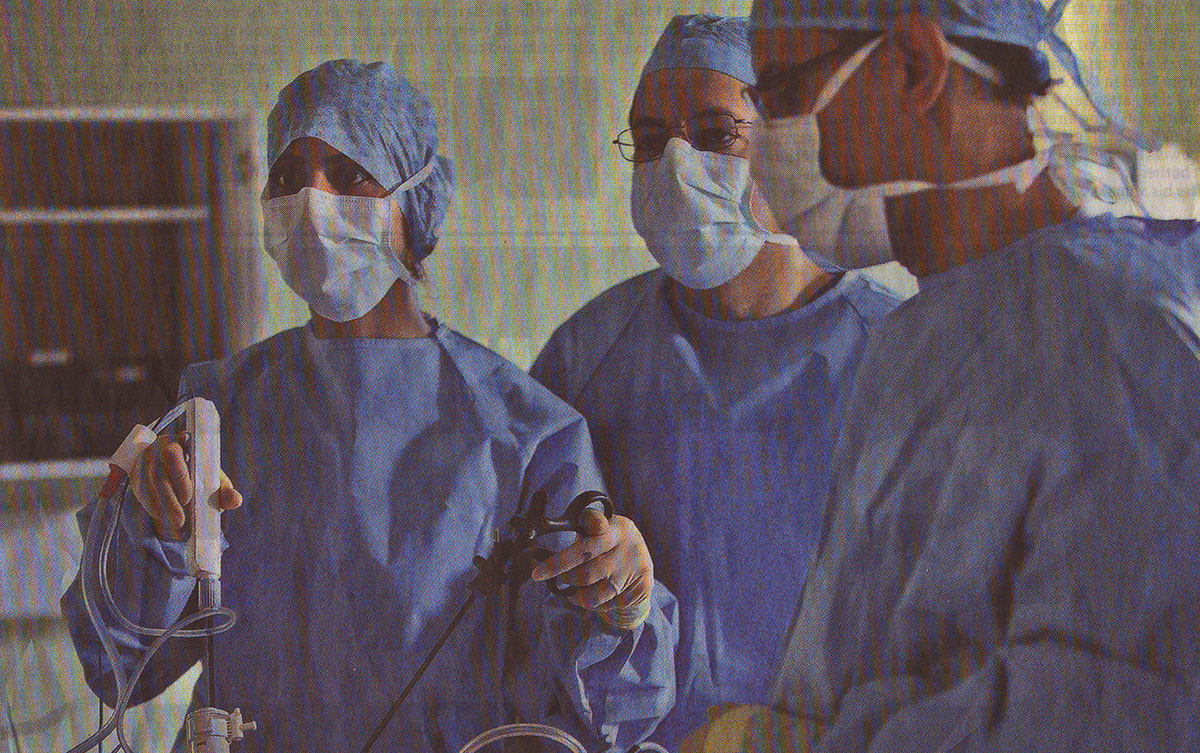


These images were chosen because the women portrayed in them are shown as people in their own right. This has been achieved by including in the overall image symbols of power or by the posture of the woman.
Subscribe to:
Posts (Atom)